
Table of Contents
Your CIBIL score and report act as a crucial financial report card in India, maintained by the Credit Information Bureau (India) Limited. This three-digit score, based on your credit history, helps lenders quickly assess your creditworthiness. It reflects your past borrowing behavior, including how consistently you’ve repaid loans and credit card dues. To maintain or improve your score—especially if you’re looking to remove written off from CIBIL report—it’s important to clear outstanding debts and resolve any discrepancies. A strong CIBIL score not only boosts your chances of getting new credit but also helps you secure better interest rates and faster loan approvals.
However, several negative entries can severely damage this report. These include frequent hard inquiries, indicating multiple credit applications; delayed or missed payments, which show poor repayment habits; and more serious markers like defaults, settlements (where loans are closed for less than the owed amount), and especially accounts marked as “written off“—where the lender has classified the debt as a loss.
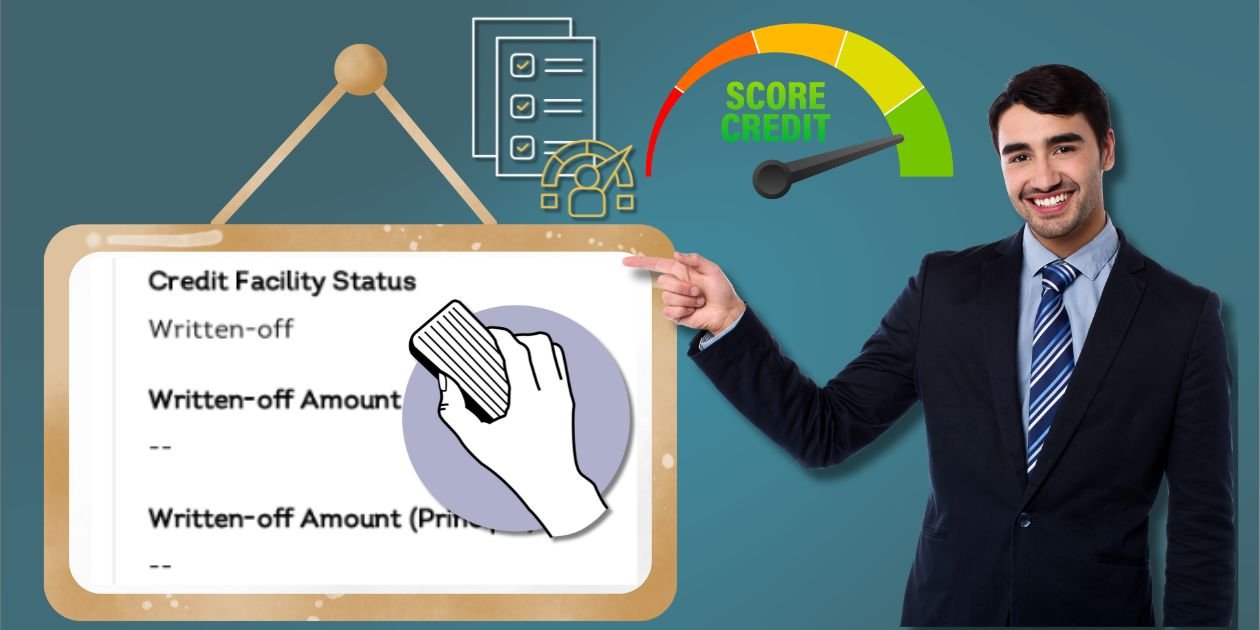
The presence of a “written off” status can drastically reduce your credit score and make lenders hesitant to extend new credit. Therefore, it is crucial to remove written off from CIBIL by clearing any outstanding dues and coordinating with the lender to update your credit record. Many individuals take proactive steps to remove written off from CIBIL, as doing so is often necessary to rebuild financial credibility and regain access to credit opportunities.
Understanding What ‘Written Off’ Truly Means:
First, it’s important to understand what a ‘written-off’ account truly means. It does not imply that your debt has been cancelled or forgiven. Rather, it is an internal accounting procedure used by the lender. When a loan remains unpaid for a prolonged period—typically 90 days—it is classified as a Non-Performing Asset (NPA). To manage their balance sheet and for tax purposes, the lender may then “write off” the loan, essentially removing it from their books.
However, this action does not eliminate your legal responsibility to repay the outstanding amount. The debt remains active and legally collectable. and this status remains a red flag on your credit report.
Impact of a "Written Off" Status on Your Credit Score:
A written-off account on your CIBIL report adversely impacts your credit score. It indicates to potential future lenders that you have previously defaulted on a payment, raising your risk profile. This may result in loan rejection or higher interest rates on any subsequent credit applied for. Hence, efforts must be made to get written off from CIBIL if at all possible. So, it’s needed to remove written off from CIBIL.
Is It Possible to Remove "Written Off" from a CIBIL Report?
Yes, it is possible—but not through shortcuts or illegal means. The only way to remove written off from CIBIL is by paying the outstanding debt to the lender and requesting an update to your credit report. Here’s how you can go about it:
Step 1: Begin by securing your CIBIL report and listing all accounts that are “written off.” Note down the lender, the amount, and the date of default.
Step 2: When you reach out, the lender will inform you of the total outstanding amount you need to pay. If you agree to pay the full amount, make sure to get all the terms and payment details in writing before making any payment. This will help avoid any confusion later.
Step 3: Pay the amount as per the settlement. Ensure that you retain the payment receipt and a No Objection Certificate (NOC) from the lender after the payment is made.
Step 4: After making the payment, ask your lender to update your credit report with CIBIL. This won’t immediately remove written off from CIBIL, but the status can be changed to closed, which shows that you’ve cleared your dues and helps improve your credit record.
Step 5: If the lender fails to update your account, you can raise a dispute directly on the CIBIL website, attaching your payment proofs and NOC.
Since January 2025, the RBI has introduced a new rule called “Post Write-Off Closed”. When a loan is not paid for a long time, it gets marked as “written off” in the CIBIL report. Later, if the customer wants to remove the written off from CIBIL, they can contact the lender and pay the full outstanding amount.
After receiving the payment, the lender updates the status to “Post Write-Off Closed”. This means the dues have been cleared after the account was written off. According to the RBI, this is not a negative remark, and it does not affect your ability to get loans.
So, while you can remove written off from CIBIL, the “Post Write-Off Closed” status will remain, but it won’t harm your credit journey.
Approximate time to reflect the data in your CIBIL report:
It’s important to remove written off from CIBIL. Once the lender updates your account with CIBIL, the change typically reflects within 30 to 45 days. However, it’s advisable to monitor your credit report to ensure the update is accurately recorded.

Conclusion:
It’s essential to understand that you cannot simply remove written off from CIBIL by requesting CIBIL to do so. CIBIL only maintains records based on information provided by the banks and lenders. To make changes, you must resolve the issue with the lender first.
While a “written off” status can damage your credit score, it’s not the end of the road. With financial discipline and timely action, you can rebuild your credit profile and regain your financial credibility. If you’re unsure how to proceed or need help in negotiating with lenders, consider seeking guidance from a certified credit counsellor.